
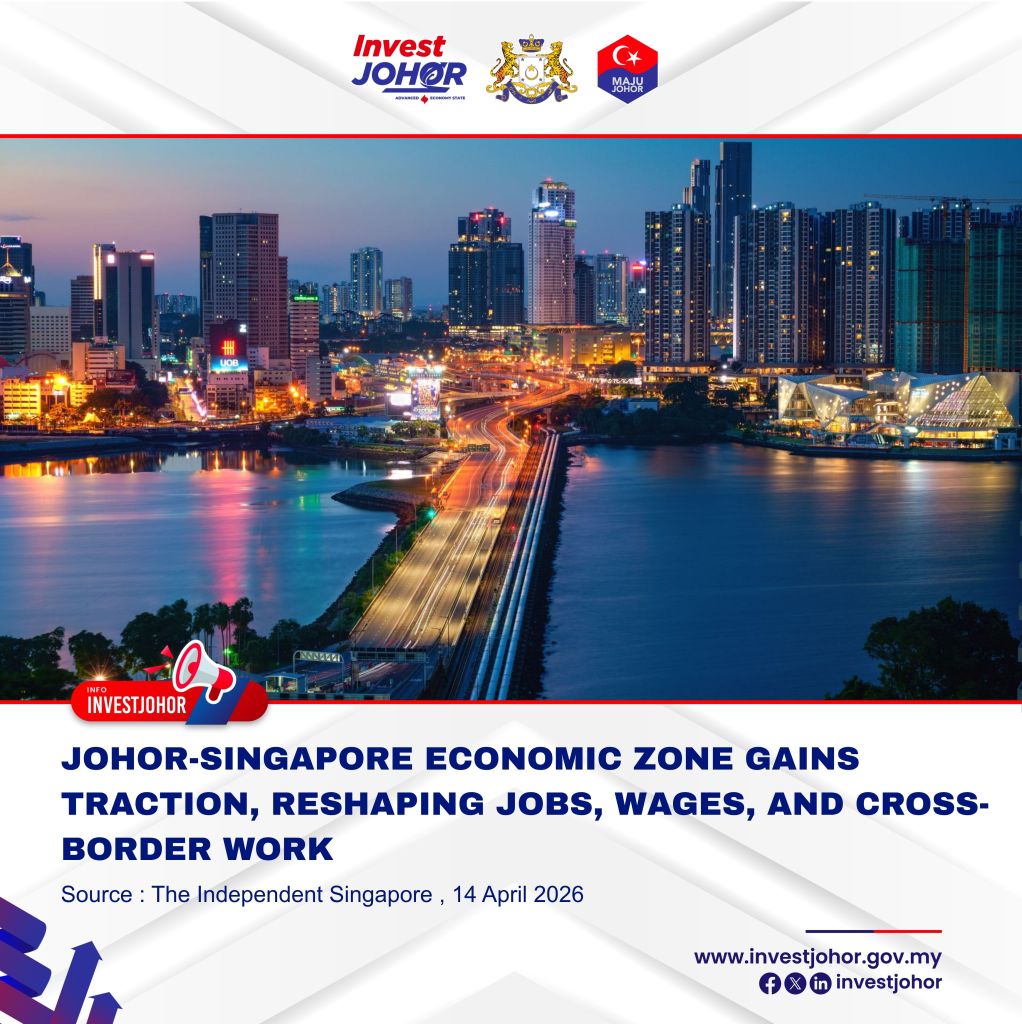
The Johor-Singapore Special Economic Zone (JS-SEZ) is moving from plan to execution, with early signals pointing to deeper cross-border integration in jobs, wages and business activity.
Officials and industry players are aligning efforts across talent, investment, and digital systems to ensure the initiative delivers real outcomes, beyond policy intent. The effort is being coordinated through the Johor-Singapore Cooperation Ministerial Committee (JSCMC), supported by working groups focused on digitalisation, workforce development and business processes.
At the centre of this push is to make it easier for companies, workers and capital to move across the Johor-Singapore corridor.
𝗔 𝘀𝘆𝘀𝘁𝗲𝗺 𝗯𝘂𝗶𝗹𝘁 𝘁𝗼 𝗺𝗼𝘃𝗲 𝗳𝗮𝘀𝘁𝗲𝗿 𝗯𝗲𝘆𝗼𝗻𝗱 𝗷𝘂𝘀𝘁 𝗽𝗿𝗼𝗺𝗶𝘀𝗲𝘀
Malaysian Investment Development Authority (MIDA) Singapore director T. Vinothan said coordination across government and industry is key to making the zone work in practice.
He stressed that the agreement with Singapore goes above a typical memorandum. It is meant to function as a working framework that delivers measurable outcomes over the next five to 10 years, rather than just long-term promises.
Supporting this are practical changes already underway. These include passport-free QR clearance systems, simpler customs processes, and the upcoming Rapid Transit System Link, expected to begin operations in January 2027.
Together, these moves aim to reduce friction at one of Southeast Asia’s busiest borders.
𝗦𝗶𝗻𝗴𝗮𝗽𝗼𝗿𝗲 𝘄𝗼𝗿𝗸𝗲𝗿𝘀 𝗮𝗻𝗱 𝗳𝗶𝗿𝗺𝘀 𝗰𝗮𝗻 𝗱𝗲𝗰𝗶𝗱𝗲 𝘄𝗵𝗲𝗿𝗲 𝘁𝗵𝗲𝗶𝗿 𝘄𝗼𝗿𝗸 𝗶𝘀 𝗱𝗼𝗻𝗲
The implications are immediate, as easier movement means companies can rethink where work is done.
Higher-cost functions may stay in Singapore, while support roles can shift across the border. This could reshape hiring patterns, especially in sectors already under cost pressure.
At the same time, improved connectivity may expand job access for workers willing to commute or relocate. Wage differences between Johor and Singapore remain a driving factor, and the zone could amplify this contrast.
For businesses, the appeal is that the lower operating costs in Johor, combined with access to Singapore’s financial and logistical networks, create a hybrid model that is hard to ignore.
𝗧𝗮𝗹𝗲𝗻𝘁 𝘀𝘂𝗽𝗽𝗹𝘆 𝗶𝘀 𝗮𝗹𝗿𝗲𝗮𝗱𝘆 𝗯𝗲𝗶𝗻𝗴 𝗽𝗼𝘀𝗶𝘁𝗶𝗼𝗻𝗲𝗱
Johor is preparing its workforce to meet this demand. Johor Corporation chief talent officer Najmie Noordin said the state produces about 35,000 to 36,000 graduates each year, many of whom are in science and engineering fields. Institutions like Universiti Teknologi Malaysia (UTM) and Universiti Tun Hussein Onn Malaysia (UTHM) play a central role in this pipeline.
Programmes under the Johor Talent Development Council (JTDC) are also expanding. One initiative, Skills for Johor, has around RM20 million (S$6.4 million) allocated this year to upskill and reskill workers in line with industry needs.
More than just supplying labour, the goal is to match it to the types of jobs the zone is expected to attract.
𝗧𝗮𝗹𝗲𝗻𝘁 𝘀𝘂𝗽𝗽𝗹𝘆 𝗶𝘀 𝗮𝗹𝗿𝗲𝗮𝗱𝘆 𝗯𝗲𝗶𝗻𝗴 𝗽𝗼𝘀𝗶𝘁𝗶𝗼𝗻𝗲𝗱
Malaysia Digital Economy Corporation (MDEC) is also pushing for collaboration in areas such as artificial intelligence (AI).
Its regional director, Raja Segaran, said opportunities span the full AI value chain, from infrastructure and graphics processing units to applications and deployment. The agency is working with partners to position Johor as a base for emerging tech operations, while linking them to Singapore’s ecosystem.
This adds a higher-value dimension to the zone, moving it beyond traditional manufacturing or logistics.
𝗜𝗻𝘃𝗲𝘀𝘁𝗼𝗿 𝗶𝗻𝘁𝗲𝗿𝗲𝘀𝘁 𝗶𝘀 𝗮𝗹𝗿𝗲𝗮𝗱𝘆 𝘀𝗵𝗼𝘄𝗶𝗻𝗴 𝘂𝗽
The Invest Malaysia Facilitation Centre Johor (IMFC-J), a one-stop centre for investors, handled over 1,000 enquiries last year and evaluated 131 potential projects. That level of interest suggests businesses aren’t waiting for full completion before making moves.
Johor is also targeting a major economic leap, aiming to grow its gross domestic product from RM150 billion to RM260 billion by 2030.
𝗪𝗵𝗮𝘁 𝘁𝗵𝗶𝘀 𝘀𝗮𝘆𝘀 𝗮𝗯𝗼𝘂𝘁 𝘁𝗵𝗲 𝗿𝗲𝗴𝗶𝗼𝗻 𝗻𝗼𝘄
This is less about competition and more about integration. Singapore remains a high-value hub. Johor is positioning itself as the scalable extension. The JS-SEZ formalises a pattern that has been happening informally for years.
The difference now is that coordination, infrastructure and policy alignment are catching up.
For workers and businesses, the message is to pay attention to how roles, wages and locations shift over the next few years.
For policymakers, execution will matter more than announcements. The pieces are in place, but consistency and follow-through will decide whether this becomes a lasting advantage or just another regional plan.
But from what is seen so far, the opportunity is real, so is the risk of uneven outcomes if wage pressures and job displacement are not managed carefully. Balance, not speed, will determine whether this works for both sides of the Causeway.
